

Roofing Materials Market to Exceed USD 197 Billion by 2033 as Urbanization, Extreme Weather, and the Push for Sustainable Construction Reshape Global Demand
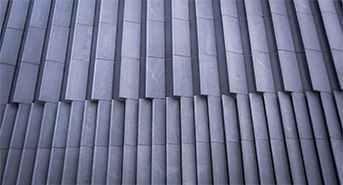
Few industries are as quietly foundational to global construction as roofing materials, and few are experiencing as many simultaneous pressures to evolve. The Roofing Materials Market was valued at USD 144.81 billion in 2024 and is projected to reach USD 197.36 billion by 2033, growing at a CAGR of 3.5% from 2027 to 2033.
Steady rather than spectacular, this growth trajectory reflects a market underpinned by genuine structural necessity. As long as buildings are built and cities expand, roofing materials remain non-negotiable. What is changing is the role those materials must play, and that evolution is reshaping every dimension of the industry.
Access the Full Report Here: https://marksparksolutions.com/reports/roofing-materials-market
Urbanization is the Market’s Foundation
The United Nations projects that nearly 68% of the world’s population will live in urban areas by 2050. That demographic reality translates directly into construction demand, which in turn drives roofing material consumption. Residential complexes, commercial buildings, industrial warehouses, and public infrastructure all require roofing solutions, and the pace of urban development across Asia-Pacific, Latin America, and Africa is ensuring that demand remains structurally robust throughout the forecast period.
Government programs are amplifying this effect. China’s Belt and Road Initiative and India’s Smart Cities Mission are generating extensive construction activity, driving demand for asphalt shingles, metal roofing, and concrete tiles across diverse climate zones. The commercial sector is adding further momentum, as e-commerce expansion fuels demand for logistics warehouses and industrial facilities that require large-scale, energy-efficient roofing solutions, including reflective cool roofs, green roofs, and solar-integrated systems.
Extreme Weather Is Changing What Buildings Need From Their Roofs
Climate-related risk is becoming an increasingly powerful purchasing driver. Hurricanes, wildfires, heavy snowfall, and prolonged heatwaves are testing roofing materials in ways traditional asphalt shingles and basic bituminous products were not designed to withstand. High winds and hail crack and displace shingles; UV exposure degrades bitumen and metal over time; freeze-thaw cycles allow moisture to penetrate, weakening structural integrity from within.
Request for a Free Sample Report @ https://marksparksolutions.com/sample-reports?500&Download_Free_Sample
The consequence is a visible shift in material preference toward resilience. Property owners and developers in high-risk climate zones are moving away from conventional options toward reinforced metal roofing, polymer composites, and advanced weather-resistant coatings. This trend is pushing manufacturers to invest in product innovation, and increasingly, that innovation is yielding materials that are lightweight, impact-resistant, and, in some cases, self-repairing, capabilities that would have seemed extraordinary a decade ago.
Bituminous Leads, But the Product Mix Is Diversifying
Bituminous roofing materials currently hold the largest share of the global market at 26.7%, a position built on affordability, durability, waterproofing performance, and ease of installation. Asphalt shingles dominate residential roofing, particularly in North America and Europe, while bituminous membranes are used for commercial and industrial waterproofing applications. Modified bitumen variants, including SBS and APP formulations, offer improved elasticity and thermal stability, extending roof lifespans and reducing long-term maintenance costs.
However, the broader product landscape is diversifying meaningfully. Metal roofing is gaining share because of its durability, recyclability, and performance in extreme weather. Clay and concrete tiles maintain strong positions in regions where aesthetic tradition and thermal mass are valued. Synthetic roofing products are emerging as a growing category, offering the appearance of premium materials at lower weight and cost. Green roofing systems are gaining traction in markets where sustainability credentials and urban heat island reduction carry regulatory and commercial value.
Download Free Sample Report: https://marksparksolutions.com/sample-reports?500&Ask_for_Discount
Asia-Pacific Dominates, North America Grows Fastest
Asia-Pacific accounts for 43.30% of the global roofing materials market, the largest regional share by a considerable margin. The segment was valued at USD 60.58 billion in 2024 and is expected to reach USD 77.08 billion by 2030. China and India anchor this dominance through sheer construction volume, supported by government housing programs and large-scale infrastructure investment. Japan and Australia contribute through demand for high-quality, weather-appropriate roofing systems suited to their distinct climate profiles.
The region also benefits from structural cost advantages, abundant raw materials, skilled manufacturing labor, and lower production costs, making it a global hub for roofing material production serving both domestic and export markets.
North America is the fastest-growing regional market, driven by active residential renovation cycles, rising demand for energy-efficient roofing upgrades, and the expansion of the commercial construction sector. Supportive regulations for energy-efficient buildings and a well-developed reimbursement ecosystem for green building improvements are fueling this momentum.
Competitive Landscape
The Roofing Materials Market is moderately consolidated, with established multinational manufacturers competing with strong regional players on product performance, distribution reach, and sustainability positioning. Key companies evaluated in this space include Atlas Roofing Corporation, BMI Group, Owens Corning, CertainTeed Corporation, Carlisle Companies Incorporated, Firestone Building Products, Johns Manville, IKO Industries Ltd., and TAMKO Building Products, among others.
Owens Corning and CertainTeed maintain dominant positions in the North American asphalt shingle segment through extensive distribution networks and strong brand recognition in residential roofing. BMI Group anchors the European market with a broad portfolio spanning bituminous and flat roofing. Carlisle Companies and Firestone Building Products are well-positioned in commercial membrane roofing, while Johns Manville offers insulation and integration capabilities for roofing systems. Competitive differentiation is increasingly centered on sustainability credentials, energy performance ratings, and the ability to meet tightening building code requirements across multiple geographies through 2033.
Media Contact
Company Name: Mark & Spark Solutions
Contact Person: Sushil
Email: Send Email
Phone: 9158340999
Address:2nd Floor, Panchsheel Park, Aundh
City: Pune
State: Maharashtra
Country: India
Website: https://marksparksolutions.com


