

Boston Nursing Home Abuse Attorney Dino M. Colucci Discusses Falls and Fractures in Massachusetts Nursing Homes
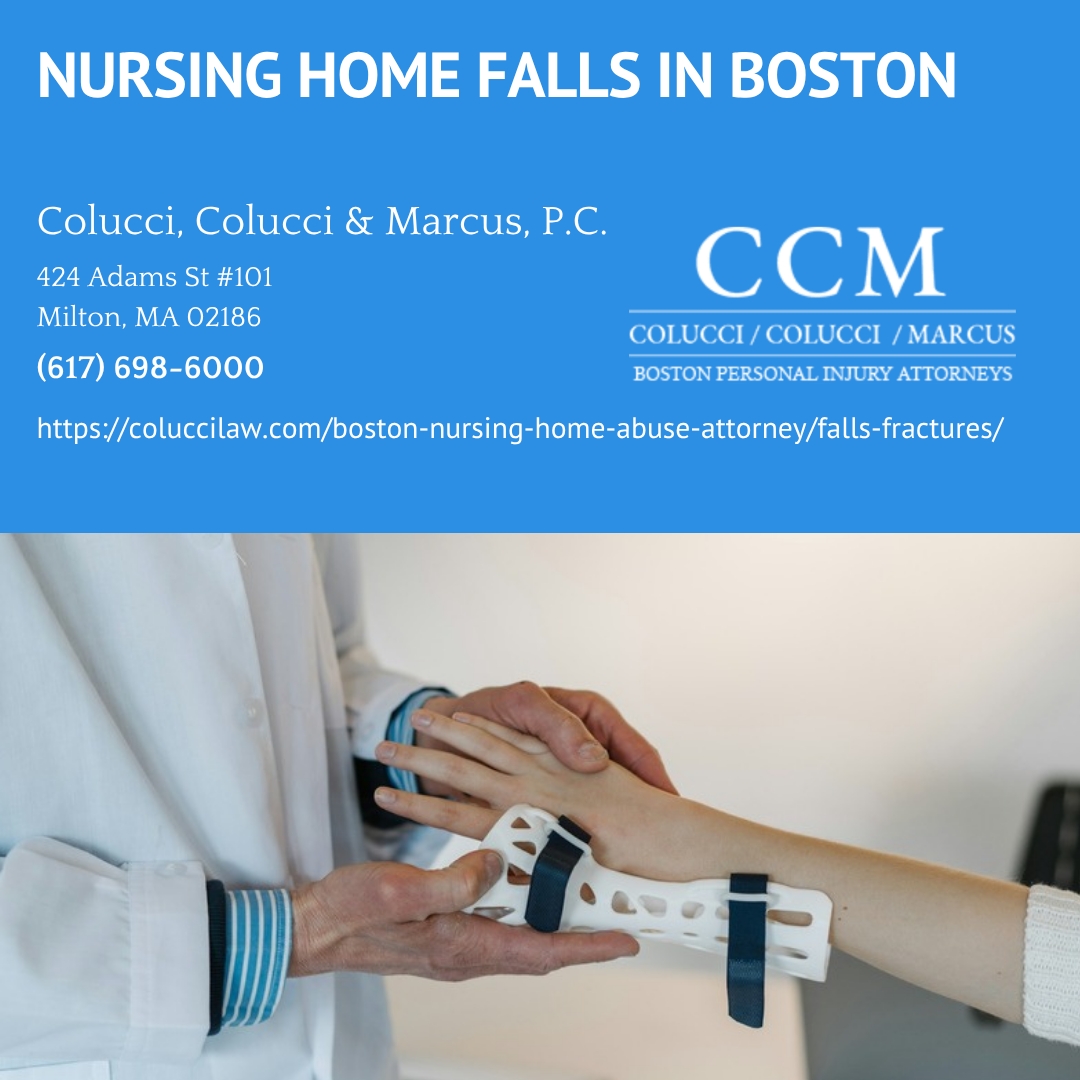
MILTON, MA – Falls remain one of the most common and serious causes of injury among nursing home residents in Massachusetts, and when a loved one suffers a fracture in a long-term care facility, families are often left wondering whether the incident could have been prevented. Boston nursing home abuse attorney Dino M. Colucci of Colucci, Colucci & Marcus, P.C. (https://www.coluccilaw.com/boston-nursing-home-abuse-attorney/falls-fractures/) is providing guidance on why these falls happen, what injuries are most common, and how Massachusetts law holds facilities accountable when reasonable safety measures are not in place.
According to Boston nursing home abuse attorney Dino M. Colucci, many nursing home falls are preventable and may result from facility-level failures rather than unavoidable accidents. Insufficient staffing, unaddressed environmental hazards such as wet floors and poor lighting, malfunctioning call buttons, broken bed rails or grab bars, and medication side effects from sedatives, antipsychotics, and blood pressure drugs all increase fall risk. “When a facility fails to assess a resident’s individual fall risk and update the care plan accordingly, the resulting injury is rarely a true accident,” Colucci explains.
Boston nursing home abuse attorney Dino M. Colucci notes that hip fractures are among the most serious injuries that follow nursing home falls and carry a substantial one-year mortality risk in older adults, often in the range of roughly 17% to 25% and higher in frailer populations. Wrist, shoulder, and vertebral compression fractures frequently produce chronic pain and lasting loss of function, while skull fractures and traumatic brain injuries may follow when a resident strikes the floor, especially when the resident is taking blood-thinning medications.
Federal nursing home regulations establish a clear legal framework for fall prevention. Under 42 C.F.R. §§ 483.20, 483.21, and 483.25(d), facilities must conduct comprehensive resident assessments, develop and implement individualized care plans, keep the environment as free of accident hazards as possible, and provide adequate supervision and assistive devices. Massachusetts also created a Commission on Falls Prevention under M.G.L. Chapter 111, Section 224, and resident rights are protected under Section 70E, including the right to prompt and adequate responses to reasonable requests, access to records, and freedom from abuse and neglect.
Attorney Colucci emphasizes that proving negligence in a nursing home fall case requires showing four elements: duty, breach, causation, and damages. Red flags that may support a claim include prior falls not documented in the care plan, missing fall prevention protocols, evidence of short staffing at the time of the incident, missing or broken walkers and grab bars, and unanswered call lights. “Facility records often tell the real story,” he adds. “Care plans, turning logs, staffing records, and incident reports either show that protocols were followed or expose gaps that became dangerous for the resident.”
The team at Colucci, Colucci & Marcus, P.C. also cautions families against accepting a facility’s account of a fall at face value. Surveillance footage may be overwritten within days or weeks depending on the facility’s retention policy, and Massachusetts has a three-year statute of limitations for personal injury claims under M.G.L. Chapter 260, Section 2A. Photographing injuries, preserving broken equipment, requesting complete medical records and incident reports, and asking the facility to retain video footage are critical early steps.
“Many families feel pressure to simply trust what staff tell them,” Matthew Marcus observes. “An independent review of the records, staffing logs, and care plan often reveals a different picture, and that is when accountability becomes possible.” Massachusetts law provides several pathways to recovery, including economic damages for hospital bills, surgery, rehabilitation, and long-term care, as well as non-economic damages for pain and suffering, loss of independence, and diminished quality of life.
When a fall results in a fatal injury, surviving family members may pursue wrongful death claims under M.G.L. Chapter 229. Wrongful death damages can include the fair monetary value of the decedent to eligible beneficiaries, including lost companionship, society, comfort, guidance, and counsel, as well as reasonable funeral and burial expenses. Conscious pain and suffering before death may be addressed through a separate survival or conscious-suffering claim when supported by the evidence.
For residents with cognitive impairments such as dementia or Alzheimer’s disease, a family member with a durable power of attorney or court-appointed guardianship can file a claim on the resident’s behalf, and the executor or administrator of the estate may pursue a wrongful death action when applicable. Acting quickly helps preserve evidence and protect every available legal option.
Families across Boston, Milton, Quincy, Braintree, and the broader South Shore and Metro Boston area are encouraged to consult an experienced attorney whenever a fall results in a serious fracture, especially when the resident had known fall risks or prior falls that should have triggered additional precautions.
About Colucci, Colucci & Marcus, P.C.:
Colucci, Colucci & Marcus, P.C. is a Milton-based law firm focused on personal injury, nursing home neglect, and wrongful death litigation throughout Massachusetts. Led by founding partner Dino M. Colucci, with partners Darin Colucci and Matthew Marcus, the firm represents injured residents and their families across the Greater Boston area, drawing on decades of courtroom experience and a record of significant results in challenging cases. For consultations, call (617) 698-6000.
Embeds:
Youtube Video: https://www.youtube.com/watch?v=y6Lt5zHLqPs
GMB: https://www.google.com/maps?cid=6757336485323234120
Email and website
Email: [email protected]
Website: https://www.coluccilaw.com/
Media Contact
Company Name: Colucci, Colucci & Marcus, P.C.
Contact Person: David Colucci
Email: Send Email
Phone: (617) 698-6000
Address:424 Adams St #101
City: Milton
State: Massachusetts 02186
Country: United States
Website: https://www.coluccilaw.com/


