

AI Is Teaching Tractors to Think Field by Field, Not Farm by Farm
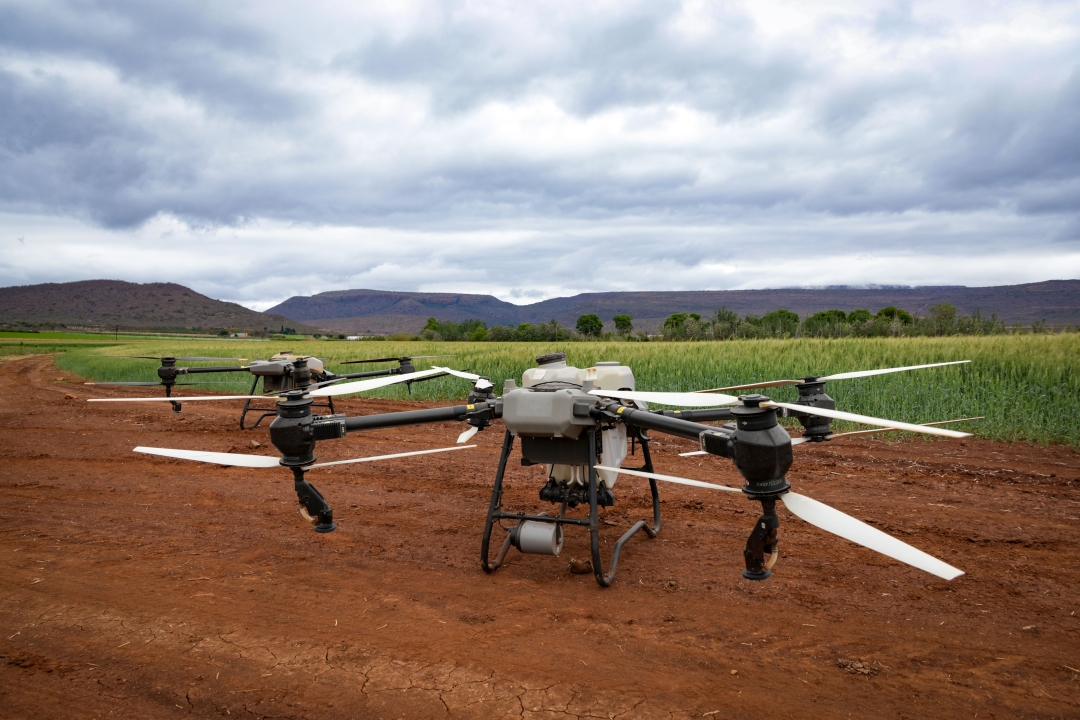
A single cornfield isn’t uniform, despite being farmed that way for generations. Soil types change every meter, moisture levels vary across the slope, and pest pressures are unevenly distributed. Precision farming aims to treat each square meter differently rather than averaging the entire field. This shift in approach is fueling the Global Precision Farming Market, which is expected to grow from USD 11.38 billion in 2025 to USD 17.20 billion by 2033, with a CAGR of 5.5%.
The Technology Doing the Heavy Lifting
AI-powered Variable Rate Application (VRA) sits at the center of this market’s next growth phase. Unlike traditional uniform application, VRA pulls together satellite imagery, drone-based multispectral imaging, soil nutrient mapping, weather forecasts, GPS guidance, and IoT sensor data to calculate exactly how much seed, fertilizer, pesticide, or water a specific patch of field actually needs, not what the whole field needs on average.
The measurable impact is well documented. Consider what field studies and academic research are finding:
-
AI-driven VRA can reduce fertilizer usage by 10–30% while maintaining or improving yield
-
Pesticide application can decrease by up to 20% under variable-rate systems
-
Irrigation water needs can drop 15–25% with precision water management
-
Yield increases of 5–15% have been recorded, depending on crop type and field variability, according to research from the International Society of Precision Agriculture.
Access the Full Report Here: https://marksparksolutions.com/reports/precision-farming-market
The USDA has tracked steady growth in precision agriculture adoption: yield monitors, GPS guidance, and variable-rate systems, particularly among large-scale corn and soybean operations, where the input savings at scale translate into meaningful cost reduction.
Why Equipment Makers Are All Racing the Same Direction
Major agricultural equipment manufacturers aren’t waiting for third-party software to catch up; they’re building AI directly into the machines themselves. John Deere, AGCO, CNH Industrial, and Trimble are all embedding machine learning and real-time analytics into sprayers, seeders, and autonomous machinery to automate variable-rate decisions on the fly. That’s a meaningful shift from precision farming as an add-on service toward precision farming as a built-in machine capability, and it’s happening as fertilizer price volatility and government pressure to reduce nutrient runoff and greenhouse gas emissions both push growers toward exactly this kind of input efficiency.
Beneath GPS: A Layered Technology Stack
GPS remains the dominant individual technology, holding an estimated 18.5% share thanks to its foundational role in navigation, auto-steering, and yield mapping. But the fastest growth is happening one layer up: Variable Rate Technology (14.7%) and IoT (13.4%) are expanding quickly as growers look to optimize inputs against rising costs.
Remote Sensing (11.8%) and GIS (10.2%) continue supporting field zoning and crop health monitoring through satellite and UAV imagery. At the same time, Artificial Intelligence itself predictive analytics, computer vision, autonomous decision-making has captured a 9.8% share as manufacturers build these capabilities directly into tractors and sprayers. Machine Learning (5.9%) and Big Data Analytics (5.3%) remain smaller today but function as the analytical backbone underneath most AI-driven recommendations. Robotics & Automation, at 4.7%, is gaining particular traction in high-value crops where labor shortages make autonomous machinery an increasingly attractive alternative. Cloud computing, edge computing, blockchain, and 5G connectivity together account for under 6% currently, small now, but positioned to matter considerably more as connected farm ecosystems mature.
A Market Led by Scale, But Growing Everywhere
The United States leads decisively with a 31.2% share, driven by widespread GPS-guided tractors and AI farm management platforms across large commercial operations. China holds second place at 13.8%, propelled by substantial government investment in digital agriculture through national smart farming initiatives.
Canada’s 7.9% share rests on large-scale wheat and canola cultivation suited to variable-rate techniques. In comparison, Germany (6.8%) and France (5.4%) lead European adoption, pushed partly by environmental regulation that rewards input optimization. Australia’s 5.9% share reflects a very different driver: water scarcity, which makes IoT-enabled irrigation especially valuable. Brazil (4.9%) continues expanding precision technology use across soybean, corn, sugarcane, and coffee production, while Japan (4.3%) is leaning heavily into robotics to offset an aging agricultural workforce. India, at 3.8% share, is an emerging growth story built on drone subsidies and digital agriculture programs, even though smallholder penetration remains limited a gap that represents significant future upside rather than a ceiling.
A Competitive Field Spanning Equipment Giants and Specialist Startups
The market includes established agricultural equipment leaders Deere & Company, CNH Industrial, Trimble, AGCO, Topcon Positioning Systems, Kubota, Hexagon AB, AG Leader Technology, CLAAS Group, Mahindra & Mahindra, and Yanmar Holdings alongside specialized precision agriculture technology firms including Farmers Edge, CropX Technologies, Taranis, Arable Labs, DJI, AgEagle Aerial Systems, Netafim, Jain Irrigation Systems, and Lindsay Corporation, each contributing to an increasingly integrated digital farming ecosystem.
Download Free Sample Report: https://marksparksolutions.com/sample-reports?1056&Download_Free_Sample
Looking Ahead
As fertilizer costs stay volatile and environmental regulation continues favoring input efficiency, AI-powered variable-rate technology looks positioned to move from early large-farm adoption toward broader use across mid-size operations and emerging markets alike, reshaping how measurable a field’s needs really are, one meter at a time.
Agricultural equipment manufacturers, agtech investors, and farm management platforms evaluating this space can access full technology, country, and competitive segmentation through Mark & Spark Solutions’ complete market study.Organizations exploring specific technologies, regional markets, or precision agriculture partnerships are welcome to request a tailored data excerpt aligned to their strategic priorities.
Media Contact
Company Name: Mark & Spark Solutions
Contact Person: Sushil
Email: Send Email
Phone: 9158340999
Address:2nd Floor, Panchsheel Park, Aundh
City: Pune
Country: India
Website: https://marksparksolutions.com/reports/precision-farming-market


