

AML Compliance Software for Lawyers: Understanding Key Compliance Tools
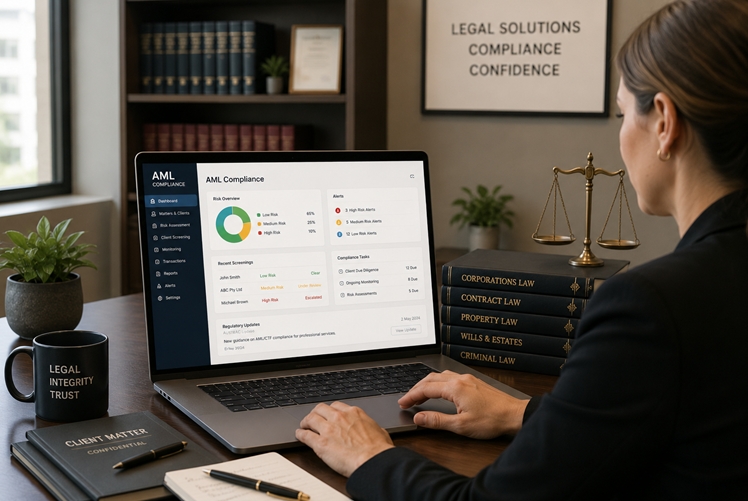
Perth, Australia – 1 October, 2026 – If your firm is preparing for Tranche 2, AML compliance software for lawyers is no longer a nice extra. It is a practical tool for handling legal work that may expose you to high money laundering risk. The right AML compliance software can make checks, records, and reporting far easier, especially when your team is busy and the rules are getting closer.
Why AML Compliance Matters for Australian Law Firms
From July 2026, many Australian legal practices will face new AML obligations under Tranche 2, making it crucial to implement a comprehensive CTF program. That matters if your law firm works with property, client money, company structures, trusts, or financing.
Non-compliance with regulatory requirements can lead to fines, legal action, and public enforcement by AUSTRAC. It can also harm referral relationships and trust, so it helps to understand the rules and the pressure points before choosing AML compliance software for lawyers.
Overview of Australian AML Laws and Recent Regulatory Changes
Tranche 2 brings many lawyers and law firms into Australia’s AML/CTF obligations framework from 1 July 2026. Firms involved in equity or debt financing, managing assets, or creating trusts or companies are likely to face new compliance requirements.
To meet AML regulations, firms need to enrol with AUSTRAC, build a written risk-based program, verify customers, monitor activity in real time, and keep records for at least seven years. These steps are designed to reduce financial crime while protecting legal compliance.
AML compliance software helps lawyers meet regulatory requirements by turning those duties into guided tasks. A platform such as easyAML can support audit trails, risk assessments, customer checks, and AUSTRAC-ready reporting in one place, allowing your support staff to assist in managing these processes effectively.
Legal Industry’s Unique AML Challenges in Australia
Law firms do not face the same risks as every other sector. Their work often involves private client matters, property deals, trust arrangements, and fast deadlines, which makes practice management and compliance hard to balance.
Common challenges include:
- checking source of funds without slowing a matter;
- spotting suspicious activity across different practice areas;
- fitting new controls into existing workflows without causing staff frustration.
Another problem is timing. Many firms leave setup too late, yet a full program, training, and system rollout can take months. If the process is rushed, risk factors may be missed, and reputational damage becomes far more likely.
Core Features To Look For in AML Compliance Software for Lawyers
The essential features to look for in leading AML software for law firms are clear: guided due diligence, identity checks, monitoring, reporting, and secure record storage. Compliance officers and legal professionals need a system that turns rules into repeatable steps.
It also helps if the platform is built for legal work rather than generic compliance. The next sections show which key features matter most in day-to-day practice.
Automated Client Identity Verification and KYC
Client onboarding becomes faster when identity verification is built into the workflow. Instead of chasing documents by email, firms can run client due diligence checks at the start of a matter and create a clear record straight away.
A useful setup includes: Biometric identity verification;
- ABN or ACN lookup and beneficial owner checks;
- PEPs, sanctions lists, and criminal watchlist screening.
This streamlines onboarding because the same process can support source of funds checks, client risk scoring, and ongoing monitoring. For a property file, that means a buyer or seller can be checked before funds move, not after concerns appear.
Real-Time Transaction and Risk Monitoring
Yes, AML compliance software can automate parts of mandatory reporting for lawyers. It flags unusual behaviour, reducing false positives, supports suspicious activity reviews, and helps prepare AUSTRAC-ready reports with less manual work.
This is important because client risk changes over time. Real-time alerts, continuous monitoring, and updated risk profiles let firms respond quickly to events like unexpected payments or new parties in a transaction.
Sanctions screening and behaviour analysis can run in the background while your team works. If a red flag appears, the software prompts the next step instead of relying on staff memory.
Integration With Legal Practice Management Systems
A key difference among AML tools is their integration with legal software and practice management systems, which enables efficient client management. Generic platforms may handle basic checks, but legal teams need workflow automation tailored to their processes.
When AML checks are separate from case management, staff must re-enter details, leading to duplicate data entry, slower work, and more errors.
A better solution connects compliance directly to the matter file. For example, when a conveyancing matter is opened, checks, records, and follow-up tasks are managed alongside the matter record instead of in a separate spreadsheet or inbox.
Tools Tailored for Law Firms: What Sets Legal-Specific AML Software Apart
Legal-specific AML compliance software is designed around how legal practices work, not just around broad risk rules. That gives compliance teams a more usable path to legal compliance.
A platform such as easyAML is built for lawyers and legal practitioners facing Tranche 2. It also supports related sectors needing AML compliance software for conveyancers, AML software for real estate, and AML software for accountants.
Customised Workflows for Trust Accounts and Matter Management
Legal-specific tools excel when they track trust accounts and matter stages. This is crucial because legal processes involve steps like intake, verification, funds review, and reporting—not just a simple customer check- while adhering to AML guidelines.
For example, onboarding a property client may start with identity checks and source reviews, followed by record storage. If risk rises, the system can trigger a deeper review before handling funds.
Workflow automation that maintains detailed records is essential. For firms managing multiple matters, it reduces missed steps and provides a clear audit trail if AUSTRAC requests decision details.
Handling Privileged Information Safely
Many lawyers worry that AML checks may compromise confidentiality. However, guidance confirms legal professional privilege remains protected, and Tranche 2 does not override core client duties.
Firms can use data sources like sanctions screening, watchlists, and adverse media without reporting privileged advice. Reporting only applies to suspicious transactions outside protected legal counsel.
To stay compliant, firms need software that aligns with Australian rules, maintains audit trails, and updates risk assessments—making legal compliance efficient and avoiding manual updates.
Streamlined Onboarding and Ongoing Client Due Diligence
AML compliance software streamlines client onboarding by giving firms one guided path from first instruction to ongoing review. That matters because compliance obligations do not end once ID is collected.
A simple legal workflow can look like this:
- verify the client and beneficial owners;
- assess risk and record source of wealth or source of funds where needed using effective AML software;
- continue monitoring and keep records for seven years.
This approach improves risk management because the file stays active from start to finish. Instead of restarting checks each time something changes, the firm can update the client due diligence profile and respond quickly.
Conclusion
In conclusion, AML compliance software is essential for Australian law firms facing complex regulations. Prioritising features like automated client verification and real-time transaction monitoring boosts compliance for financial institutions and protects sensitive data. Solutions tailored for legal practices streamline workflows and support ongoing due diligence, helping firms stay alert to potential risks. When choosing tools, look for options that integrate with your current systems and address your specific needs. Strengthen your compliance strategy by exploring available solutions today.
Frequently Asked Questions
How does AML compliance software help law firms meet their obligations?
AML compliance software helps firms manage compliance obligations through guided AML checks, secure records, ongoing monitoring, and alerts for suspicious activity, including AML screening. It also supports reporting and gives staff a clearer process to follow when Tranche 2 duties apply.
What should Australian lawyers prioritise when selecting AML software?
Australian lawyers should prioritise AML software that supports legal compliance, CTF compliance, due diligence, and risk management within existing practice management workflows. A legal-specific system is usually easier for staff to use and less likely to create delays or duplicate work.
Can AML compliance tools automate ongoing client checks and reporting?
Yes. Good due diligence software can automate ongoing monitoring, screen sanctions lists, review adverse media, and help prepare regulatory reporting related to terrorism financing. That gives firms faster visibility when a client’s risk changes and reduces the chance of missing a required follow-up.
About EasyAML Pty Ltd
EasyAML Pty Ltd is an Australian compliance technology company providing AML compliance software designed for law firms, conveyancers, accountants, and other regulated professionals. Its platform supports client verification, risk assessments, ongoing monitoring, recordkeeping, and AML/CTF compliance workflows.
Media Contact
Company Name: EasyAML Pty Ltd
Contact Person: Ches Rafferty
Email: Send Email
Country: Australia
Website: https://easyaml.com/


