

Pipeline Floats Improve Visibility and Operational Control in Busy Port Environments
Binzhou City,Shandong Province – October 21, 2026
A floating pipeline is easier to manage when your crew can clearly identify its position, especially near workboats and active berths. Well-chosen Pipeline Floats provide buoyancy while improving route visibility. For port operators and marine contractors, this combination supports daily inspection, equipment coordination, and more organized water operations.
Why Pipeline Visibility Matters in Port Operations
A busy port is not always the easiest place to operate a floating pipeline.
Workboats move between construction areas, service vessels approach nearby facilities, and maintenance crews may need to cross the same working zone throughout the day.
When a floating pipeline passes through these areas, you need to know exactly where it sits and whether its position has changed.
Poor visibility can make routine operations more complicated. A section of pipeline may be difficult to distinguish from the water surface, particularly when lighting or weather conditions are unfavorable.
High-visibility pipeline floats make the floating line easier to recognize from nearby work areas.
This does not replace navigation markings or vessel-traffic procedures, but it provides an additional visual reference for your operating team.
For port constructors and marine engineering companies, a clearly identifiable pipeline is easier to inspect, monitor, and manage during everyday operations.
How Do Pipeline Floats Improve Work-Zone Visibility?
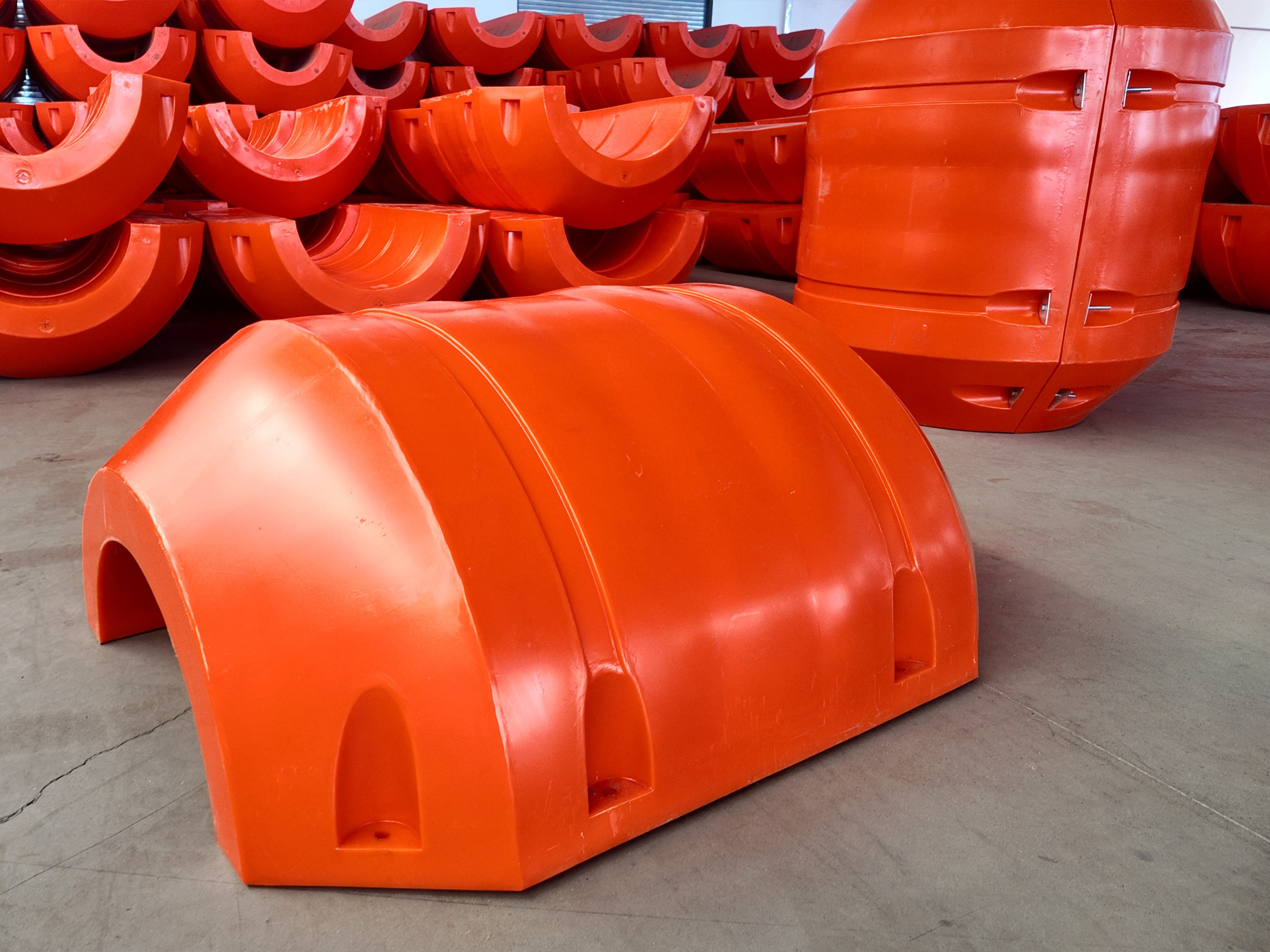
Pipeline floats support visibility by keeping sections of the pipeline near their intended floating position while providing an identifiable external surface.
When the floats are manufactured in bright colors, your crew can more easily distinguish the supported pipeline from the surrounding water.
Giant Rubber offers pipe float configurations with orange, yellow, black, and project-specific color options.
For a pipeline operating in an active construction area, orange or yellow float bodies may help nearby workers recognize the pipeline during daylight.
However, color alone is not a complete safety solution.
Your project may also require suitable warning signs, authorized marine markings, lighting, restricted areas, or workboat communication procedures.
The best approach is to combine visible marine pipeline floats with the site’s established operational controls.
This is particularly important where pipeline routes pass close to vessel movements or temporary marine equipment.
Pipeline Stability Makes Visual Inspection Easier
Visibility is useful only when your pipeline also maintains a reasonably consistent operating position.
A floating line that develops unsupported sections may sit unevenly in the water. Certain areas may become harder to observe, while bends or connections experience unnecessary movement.
A correctly configured Floating Pipeline support system distributes buoyancy along the pipe and helps maintain the intended floating profile.
For your inspection team, this makes unusual changes easier to identify.
If a section begins sitting noticeably lower than neighboring sections, you can investigate whether the cause is connected to buoyancy, loading, fastening, or pipeline condition.
The floats do not automatically prevent every movement or connection problem. Their value comes from providing suitable support that makes the complete system easier to observe.
For long marine pipelines, consistent support and visual monitoring are especially useful when several teams share responsibility for the same working area.
Which Pipeline Float Features Matter in Active Marine Areas?
A pipe float used around busy working areas needs to handle more than continuous water exposure.
It may experience contact with lifting equipment during installation, repeated movement from waves, or occasional contact with floating objects.
A durable polyethylene outer body provides corrosion resistance and helps protect the float against routine outdoor exposure.
The split-body construction is another practical advantage. Instead of sliding the float along the complete pipe length, your team can position matching halves around the pipe and secure them with appropriate fastening hardware.
This can simplify installation when the pipeline has already been assembled.
Selected configurations can also use closed-cell foam filling for additional flotation protection after localized shell damage.
For B2B projects, the important point is matching these features to the actual application rather than assuming every float requires the same construction.
Product Dimensions and Buoyancy Should Match the Pipeline
Bright colors and durable construction are useful, but they cannot compensate for incorrect buoyancy.
A float must provide suitable support for the pipeline’s operating weight, not just its empty weight.
For example, Giant Rubber’s published product range includes the FT500*800, with a nominal external diameter of 500 mm, length of 800 mm, and listed net buoyancy of 240 kg.
The catalog also lists the FT700*900, with a nominal external diameter of 700 mm, length of 900 mm, and listed net buoyancy of 450 kg.
These figures are product specifications, not universal recommendations for every pipeline.
Your actual requirements depend on pipe weight, transported material, connection components, and the desired floating position. The selected model and configuration should be confirmed against the project’s technical data.
You can review available options in the Giant Rubber Pipe Floats product range.
How Pipeline Floats Support Daily Site Management
In an active marine project, the pipeline may be inspected by different people throughout the day.
One team may handle pumping operations, another may manage nearby vessels, and a separate crew may inspect floating equipment.
Clear identification helps these teams communicate about the same sections of pipeline.
For example, a project may divide its floating pipeline into defined inspection zones. Each zone can be associated with a route drawing, identification code, or inspection record.
When a maintenance issue is reported, the operating team can locate the relevant section rather than checking the complete line without guidance.
You may also choose different colors or identification markings for separate project sections where appropriate.
These arrangements are not mandatory features of every float system. They are practical options that can help your team manage more complicated working environments.
Factory Shipment Example: Preparing Pipeline Floats for Installation
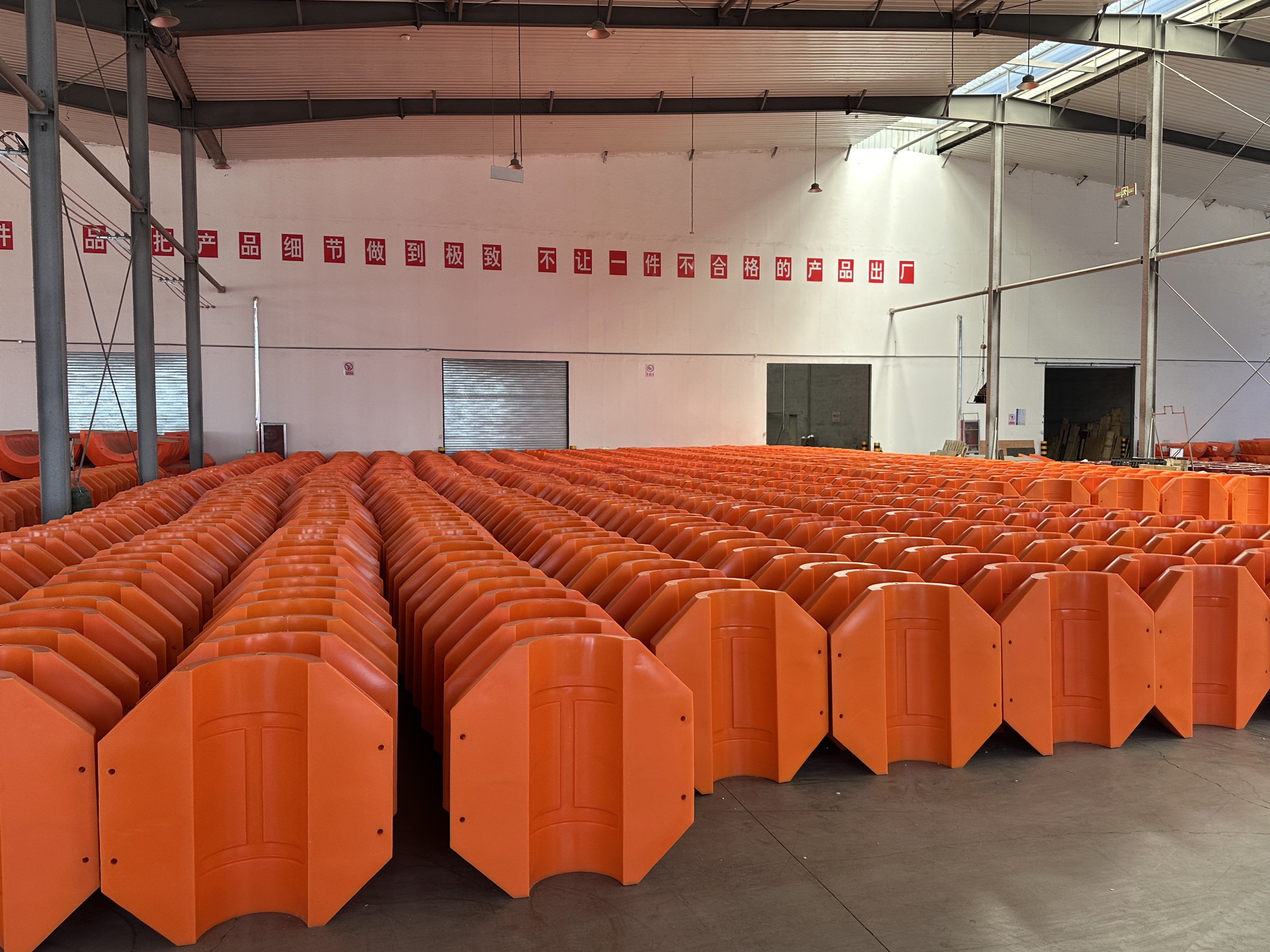
A previously published Giant Rubber factory shipment report described modular pipeline floats prepared for a marine pipeline project.
The reported delivery preparation included dimensional checks, matching float sections, organized fastening components, and package identification.
For a contractor receiving the equipment, these details matter because installation often begins shortly after the products arrive at the site.
If matching halves are mixed between specifications, additional sorting may be required. If fastening hardware is difficult to identify, the installation crew may lose time before assembly begins.
Organized packing helps reduce these avoidable problems.
For port projects where different pipeline sections may be installed in sequence, clear product identification also makes it easier to prepare each group of floats before deployment.
The previously published pipeline float shipment report provides additional information about this type of factory preparation.
Specific shipment quantities, customer details, and delivery dates should be taken from verified order records rather than estimated.
What Should You Confirm Before Ordering Pipeline Floats?
When purchasing pipeline floats for port operations, your supplier needs to understand more than the pipe diameter.
A useful technical inquiry should include:
-
Pipeline Details: outside diameter, wall thickness, operating weight, and transported medium
-
Working Environment: water conditions, vessel activity, and installation location
-
Buoyancy Requirements: desired floating position and relevant connection loads
-
Visibility Requirements: preferred color, identification markings, and work-zone conditions
-
Delivery Requirements: quantity, installation sequence, hardware, and packing documentation
This information helps the manufacturer recommend a suitable configuration while allowing your project team to plan installation and inspection more effectively.
At Giant Rubber, project requirements can be reviewed before production to confirm float dimensions, available construction options, identification needs, and delivery arrangements.
Applications of Pipeline Floats in Water Infrastructure
Although busy ports are an important application, marine pipeline floats are also used across other infrastructure environments.
Marine engineering companies may require floating pipeline support for long-term material transfer or temporary pipeline installations.
Land reclamation developers may use floating pipeline systems between working areas.
Water resources and environmental agencies can apply supported pipelines to water-transfer facilities, reservoirs, and temporary water-management projects.
Government and public utilities may also require buoyancy support for industrial water lines, infrastructure maintenance, and temporary pipeline arrangements.
In each application, you need to evaluate the pipe, operating load, environment, and installation requirements.
The benefit of modular pipeline floats is that their configuration can be matched to different project conditions without requiring a completely different support concept.
Frequently Asked QuestionsCan Pipeline Floats Be Supplied in Different Colors?
Yes. Different colors may be available depending on the selected model and order requirements. High-visibility colors can make pipeline sections easier to identify, but you should confirm the final color scheme against your site’s operational requirements.
Are Bright Pipeline Floats Sufficient for Night Operations?
No. Bright body colors alone are not sufficient for low-light operations. You may need approved lighting, suitable markings, vessel communication procedures, or additional controls according to the operating area.
Can Pipeline Floats Carry Project Identification Markings?
Custom identification may be available for project orders. You can discuss labels, model references, colors, or other markings with the manufacturer before confirming production.
What Should You Do If a Pipeline Float Becomes Difficult to See?
Check whether the problem is caused by surface contamination, deterioration, reduced freeboard, or an incorrect floating position. The affected section should be inspected before deciding whether cleaning, adjustment, or replacement is necessary.
Final Thoughts
Pipeline floats support more than buoyancy in active marine environments. Suitable visibility, durable construction, correct sizing, and organized delivery help your team manage floating pipelines more effectively.
Share your pipe specifications and site conditions with Giant Rubber to discuss a suitable configuration.
About us
Shandong Binzhou Juhua Rubber & Plastic Co., Ltd. is a leading manufacturer of polyethylene flotation products in China, specializing in high-performance pipeline floats, marine navigation buoys, mooring buoys, and debris barriers. With strong R&D capabilities and advanced production technology, we provide efficient and professional integrated solutions for global water engineering projects.
Media Contact
Company Name: Shandong Binzhou Giant Rubber Rubber & Plastic Co., Ltd.
Contact Person: Media Relations
Email: Send Email
Country: China
Website: https://www.pefloaters.com/


