

The Critical Role of XPZ Laboratory Glassware Washers in Chemical Research
The Foundation of Chemical Accuracy In modern chemical laboratories, the automated glassware washer has transitioned from an operational luxury to a critical infrastructure component. Beyond accelerating daily workflows, automated cleaning directly underpins the accuracy of experimental data and the safety of research personnel. As analytical methods become increasingly sensitive, XPZ Automatic Laboratory Glassware Washers deliver the standardized, rigorous decontamination processes required to meet contemporary scientific standards.
This analysis explores the multi-faceted importance of integrating XPZ automation into chemical research environments.
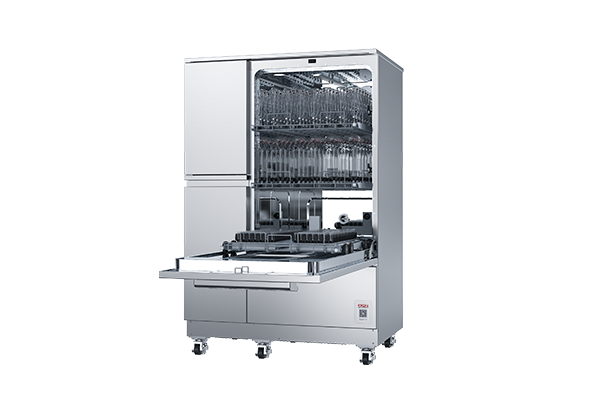
Flash-F2
1. Maximizing Analytical Efficiency
Chemical synthesis and analytical workflows necessitate the constant reuse of highly diverse glass and ceramic instruments, including volumetric flasks, beakers, test tubes, and graduated cylinders. Relying on manual labor to scrub cross-linked polymers, viscous grease, or persistent organic films is a significant bottleneck.
XPZ automated cleaning frameworks optimize this process by operating continuous, high-throughput batches. This substantial reduction in preparation downtime simplifies instrument turnaround, allowing researchers to shift their focus from mechanical maintenance to active experimental design and data analysis.
2. Eliminating Cross-Contamination and Securing Safety
Chemical experimentation frequently involves aggressive reagents, such as concentrated acids, heavy metals, volatile organic solvents, and highly toxic substances. Imperfectly cleaned glassware presents serious operational risks:
-
Chemical Interference: Trace ions or residual surfactant films on glass walls can alter pH, poison delicate catalysts, or compromise complex analytical readings like HPLC, ICP-MS, and GC-MS.
-
Workplace Exposure: Manual handling increases the likelihood of skin exposure to chemical residues and accidental lacerations from broken glass.
XPZ systems address these challenges through fully enclosed chambers equipped with high-temperature thermal disinfection and automated neutralizer dosing, thoroughly removing dangerous residues while shielding laboratory personnel from direct contact.
3. Mitigating Human Error and Boosting Reproducibility
The foundation of scientific rigor rests upon data reproducibility. Manual washing is inherently variable, subject to changes in water temperature, brush degradation, and individual technician habit. This variability introduces unquantifiable errors into chemical research.
XPZ glassware washers overcome human inconsistency by utilizing fully programmable logic control systems. Standardized cycles guarantee identical mechanical action, precise chemical concentrations, and validated temperature curves for every single batch, delivering highly reliable data baselines.
4. Supporting Environmental Sustainability
Modern research institutions operate under increasingly strict environmental compliance mandates. Manual cleaning typically involves continuously running taps and excessive detergent usage, resulting in extensive resource waste and chemical runoff.
XPZ engineering integrates advanced fluid dynamic optimization and closed-loop water recirculation systems. By recycling filtered rinse water and utilizing micro-dosing pumps for specialized eco-friendly cleaning agents, XPZ washers drastically minimize fresh water consumption and lessen the chemical footprint discharged into local wastewater systems.
5. Advancing Laboratory Quality Management
The operational management of high-level academic and industrial laboratories dictates tight traceability. XPZ automatic washers feature integrated microprocessor controls that automatically log critical metrics for every cycle—including wash time, temperature curves, and final rinse water conductivity. This automated data collection provides standard operating procedure (SOP) verification and reliable records required for formal laboratory audits, ISO certifications, and strict internal quality control inspections.
6. Adaptability to Complex Geometry and Trace Analysis
Advanced chemical research often utilizes specialized micro-analytical apparatuses with intricate, narrow-necked, or fragile geometries that defy traditional manual brushes. XPZ addresses this through highly modular direct-injection rack systems. These custom fixtures channel high-pressure, heated water directly inside complex vessels, such as volumetric flasks, pipettes, and capillary tubes, ensuring thorough impurity removal even within inaccessible interior blind spots.
Conclusion
The integration of an XPZ Automatic Laboratory Glassware Washer is central to the modernization of chemical research. By strengthening analytical efficiency, protecting personnel safety, minimizing human variability, and providing auditable data logs, XPZ technology establishes a robust foundation for scientific innovation. Investing in automated washing systems ensures that laboratories operate with the maximum precision required to achieve valid, breakthrough scientific discoveries.
Media Contact
Company Name: Hangzhou Xipingzhe Instruments Technology Co., Ltd.
Contact Person: Media Relations
Email: Send Email
Phone: +86 17767179895
Country: China
Website: https://www.laboratorywasher.com/


