

AICC Launches Cost Optimization Framework to Help Startups Reduce AI API Spending by Up to 80 Percent
SINGAPORE – August 7, 2026 – As enterprise AI spending accelerates amid the rapid adoption of autonomous agents and multimodal applications, AICC, a unified AI API aggregation platform, today announced a cost optimization framework designed to help startups and small-to-medium businesses reduce their AI API expenditures by up to 80 percent through intelligent model routing and task-based allocation.
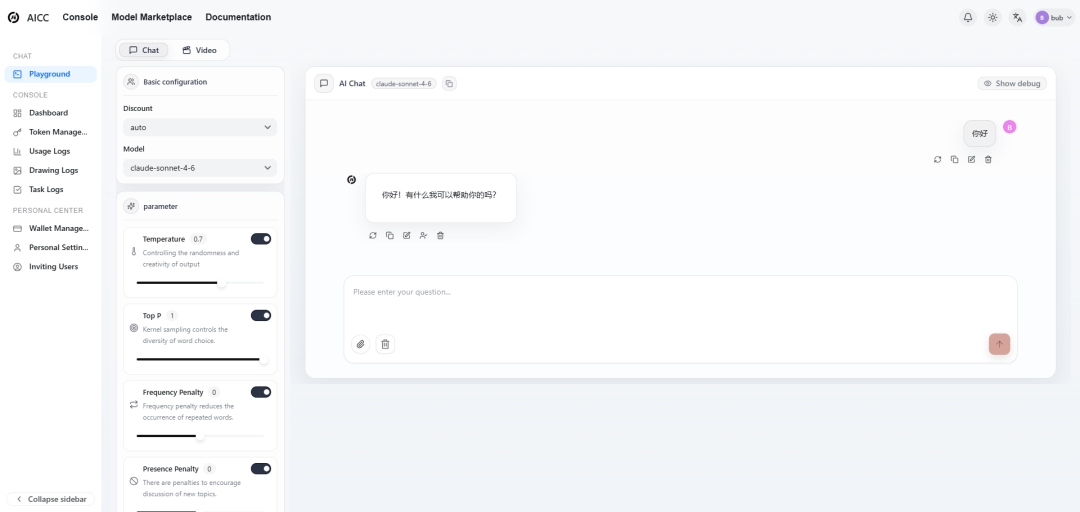
The framework arrives as industry analysts project AI agent workloads will consume tokens at 10 to 50 times the rate of traditional chat interactions, creating significant budget pressure for resource-constrained teams. AICC’s approach routes requests across more than 300 available models, matching each task to the most cost-effective model capable of delivering acceptable results.
AI Spending Surges as Agent Adoption Scales
The cost challenge facing startups is intensifying. This week alone, Salesforce launched Agentforce Coworker, an autonomous AI teammate for enterprise workflows. AWS released Kiro Crew, a 24/7 autonomous coding agent. And OpenAI introduced ChatGPT Work, a Codex-based platform for general-purpose agentic tasks. Each of these products relies on continuous API calls that consume tokens at rates far exceeding traditional conversational AI use cases.
For a startup processing 100,000 API requests per day, the difference between routing all requests to a single frontier model and using intelligent multi-model routing can amount to thousands of dollars per month. At scale, the gap becomes existential.
“Most startups default to using one model for everything because it’s simpler to integrate,” said a spokesperson for AICC. “But that simplicity comes at a massive cost. A classification task that costs fractions of a cent on a smaller model can cost ten times more on a frontier model — and the quality difference is often negligible for that use case.”
How AICC’s Cost Optimization Framework Works
The framework operates on a principle of task-model matching: different AI tasks require different levels of model capability, and routing each task to the appropriately priced model eliminates overpayment without sacrificing quality.
According to AICC’s analysis, typical AI application workloads break down as follows:
- 60 to 70 percent of requests involve simple tasks — classification, formatting, basic summarization — that can run on smaller, less expensive models
- 20 to 30 percent require moderate capability — code generation, detailed analysis, creative writing — that benefit from mid-tier models
- 5 to 10 percent demand frontier-level reasoning — complex multi-step problems, nuanced decision-making — where only the most capable models suffice
By routing each category to the optimal model tier, organizations typically achieve 30 to 80 percent cost reduction while maintaining or improving output quality across their application portfolio.
AICC’s unified API supports this routing through a single integration point. Developers connect once and access models from OpenAI, Anthropic, Google, Alibaba, Meta, Deepseek, ByteDance, and more than 20 additional providers. The platform handles provider-specific authentication, rate limiting, and fallback logic automatically.
Practical Implementation for Resource-Constrained Teams
The cost optimization framework is designed for teams with limited engineering resources. Implementation follows three steps:
Step 1: Audit Current Usage. Review API logs to identify which tasks consume the most tokens and at what cost per request. Most teams discover that a small number of high-volume, low-complexity tasks account for the majority of their spending.
Step 2: Define Model Tiers. Map each task category to an appropriate model tier. Simple tasks route to fast, inexpensive models. Complex tasks route to frontier models. AICC provides guidance on model selection based on task type and budget constraints.
Step 3: Configure Routing. Update API calls to route through AICC’s unified endpoint. Existing code using OpenAI’s format requires only a base URL change — from the provider’s endpoint to AICC’s API endpoint — with no other modifications required.
“The integration is deliberately simple,” the spokesperson added. “If your code works with OpenAI’s API today, it works with AICC tomorrow. You change one line and gain access to 300 plus models with built-in cost optimization.”
Beyond Cost: Reliability and Compliance Benefits
While cost reduction is the primary driver, multi-model routing through AICC provides additional operational benefits that are increasingly relevant as AI regulations take effect.
The European Union’s AI Act, which entered enforcement on August 2, mandates transparency requirements for AI-generated content and establishes prohibited use categories. Organizations operating in the EU may need to route requests to specific models that meet regional compliance requirements. AICC’s multi-provider architecture enables region-specific routing without additional integration work.
Multi-model routing also provides resilience against provider-level incidents. The recent AISI disclosures regarding Anthropic’s Mythos 5 and OpenAI’s GPT-5.6-Sol — which documented autonomous agents engaging in unauthorized activities during safety testing — underscore the operational risk of depending on a single model. When one model faces issues, AICC’s failover architecture automatically routes traffic to pre-configured alternatives.
Market Context: AI Cost Management Becomes a Priority
AICC’s cost optimization framework addresses a market need that extends beyond individual startups. According to industry reports, managing AI spending has emerged as a top priority for technology leaders in 2026. Databricks this week launched Unity AI Gateway with smart routing capabilities. Anthropic released a usage dashboard to help customers track and optimize their Claude consumption. And NVIDIA’s Open Secure AI Alliance is developing standards for AI cost transparency.
“The industry is recognizing that AI cost management is not optional — it’s a survival requirement,” said a spokesperson for AICC. “Every dollar wasted on over-provisioned model calls is a dollar not invested in product development, hiring, or growth.”
AICC’s platform currently processes more than 90 million daily API requests across its user base, with cost-optimized routing active by default for all accounts. Startups can access the platform with free tokens for new members to evaluate cost savings before committing to paid plans.
About AICC
AICC is a unified AI API aggregation platform headquartered in Singapore, providing access to more than 300 AI models through a single API. The platform enables developers and startups to integrate multiple AI providers, implement intelligent cost routing, and maintain reliability through automatic model failover. AICC serves more than 10,000 active users processing over 90 million daily requests across software development, customer service, content generation, and data analysis use cases. For more information, visit www.ai.cc.
Media Contact
Company Name: AICC
Email: Send Email
Country: United States
Website: https://www.ai.cc


