

Wholesale Buyers Explore Top Plastic Tumbler Lids for Bulk Purchasing
Huizhou, Guangdong, China – September 28, 2026
Choosing plastic tumbler lids for your wholesale orders isn’t just about comparing prices per unit—it’s a bit more involved. You gotta make sure the lid fits the cup’s diameter, matches the rim shape, and suits what you’re using it for. Even a tiny mismatch can lead to wobbling, spills, or customer complaints right at the counter. So, fitting should always come first.When shopping around, it helps to look at different designs—flat, dome, straw-slot, or sip-through—and think about what works best for your drinks. For example, a smoothie shop might need extra space for toppings, while a café might prefer a lower profile so it’s easier to store. Pay attention to the material, finish, and the size of the opening, and don’t forget to ask for samples before you buy in bulk. Always test the lid on the actual tumbler you plan to use—don’t just rely on looks because sometimes, similar-looking cups can behave totally differently. It’s an easy step to overlook, but trust me, it’s worth it.Also, when evaluating wholesale options, don’t just focus on the product itself. Check how it’s packaged, how many come in a carton, how long lead times are, and whether the quality stays consistent across batches. Make sure to ask your supplier for clear specs and get everything in writing to confirm compatibility. If you’re dealing with hot or cold drinks, double-check that the lids are designed to handle those temperatures—don’t decide based on looks alone. That shiny finish might look nice, but it doesn’t tell you how well it performs day to day.There’s no one-size-fits-all perfect lid out there. A budget-friendly option might be great if you’re hosting a big event, but if branding matters more, you might want a tighter fit or a more distinctive design. Take your time to compare samples, costs, and handling ease before making a final call. And remember, it’s okay if you miss some details—just keep an open mind and be ready to reassess once your staff and customers start using them. Flexibility is key!
 Understanding Plastic Tumbler Lid Types and Their Uses
Plastic tumbler lids serve different needs, even when they look similar. Flat lids with straw openings suit iced drinks and quick service. Check the opening size against the straws customers actually use. A dome lid leaves room for whipped toppings or fruit, but its extra height can make cups harder to stack and carry.Sip-through lids let customers drink without a straw. They can work well for offices, events, and takeaway counters. Slider openings offer some spill resistance, but they are not automatically leakproof. Fit matters. Before ordering in bulk, compare the lid’s rim diameter and locking edge with the cup, then test filled samples during normal handling.Wholesale buyers should also check the plastic type and the supplier’s temperature guidance. A lid made for cold drinks may not suit hot beverages. Ask how lids perform after washing if reuse is expected, and check whether nested lids separate easily during service. Small details matter. A lid may fit securely on a clean, dry cup but loosen when the rim is wet or slightly warped. That test is easy to overlook, and it can change which style is practical for daily use.
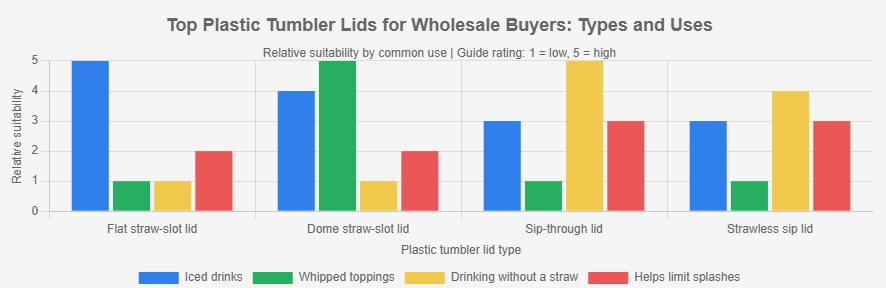
How to use this guide: Ratings are qualitative comparisons on a 1–5 scale, not standardized test results. Dome lids provide extra room for toppings; straw-slot lids suit cold drinks; sip-through lids allow drinking without a straw. Check cup and lid specifications before using them with hot beverages, and note that a lid does not necessarily make a cup leakproof.
Comparing Lid Materials, Shapes, and Drinking Openings
For wholesale buyers, lid material affects clarity, stiffness, and how securely a lid grips the cup rim. Polypropylene lids are generally flexible and resist cracking during handling, while polystyrene options can feel more rigid but may split under pressure. Recycled-content plastics can support material goals, though appearance and consistency vary by supplier. Check samples against the actual cup, not just a specification sheet. A slightly loose fit is easy to miss.
Shape changes both use and packing. Flat lids stack neatly and suit cold drinks with a straw opening. Dome lids leave room for foam or toppings, but take up more storage space. Drinking openings matter, too: a straw slot is convenient for thicker drinks, while a sip-through opening can work better for simple beverages. Some openings leak when cups tip; test them with the drink filled to serving level. A Disposable Plastic Tumbler program may use several lid styles, so confirm rim fit across cup sizes before ordering. There is no perfect option. Small details matter. Check whether condensation makes the lid harder to grip, too.
Matching Lids to Tumbler Sizes and Designs
Matching a lid to a tumbler starts with the rim, not the product photo. Measure the opening across its widest point, then check the rim shape and fit style. A lid made for a close-fitting round rim may not seal well on a tapered cup. Even a small mismatch can cause leaks during stacking or transport. Small gaps matter. For wholesale orders, test samples with the actual tumbler, filled with water and carried at different angles.Tips: Ask suppliers for lid dimensions and compatible tumbler specifications. Test straw openings, sip slots, and plugs with the accessories customers will use. Disposable Plastic Cups And Lids may look similar, but their fit is not always interchangeable.Design matters too. A wide straw slot suits thick drinks, while a smaller sip opening works better for direct drinking. Clear lids can show the drink inside, but condensation may cloud the view. Check that lids snap on without excessive force and stay secure after repeated handling. One detail is easy to overlook: stacking. A lid that fits beautifully but catches on the next cup can slow packing. It is worth testing a full stack, not just one tumbler.
Top Plastic Tumbler Lids for Wholesale Buyers – Matching Lids to Tumbler Sizes and Designs
| Tumbler Type | Common Rim Diameter | Suitable Lid Design | Typical Lid Features | Wholesale Matching Check |
|---|---|---|---|---|
| Cold beverage cup, approximately 12–16 oz | Often around 90 mm; confirm the cup specification | Flat lid with straw slot | Low-profile design; centered or offset straw opening | Match the lid’s specified fit diameter and rim profile to the cup, not capacity alone. |
| Cold beverage cup, approximately 20–24 oz | Often around 98 mm; dimensions vary by cup style | Flat lid with straw slot or dome lid | Flat lids suit a low profile; dome lids provide extra headspace for toppings | Check whether the larger cup uses a wider rim; 90 mm and 98 mm lids are not interchangeable. |
| Cold cup for whipped or layered drinks | Commonly around 90 mm or 98 mm | Dome lid with straw opening | Raised center creates clearance above the drink; openings vary by design | Confirm dome height, rim fit, and straw-hole size against the cup and intended beverage. |
| Reusable tumbler with a defined drinking rim | Measure the outside rim diameter and rim profile | Press-on sip lid or slider lid | Drinking opening may include a sliding cover or a closable plug | Check the tumbler’s exact rim shape and lid attachment method; reusable designs are often model-specific. |
| Hot beverage cup or tumbler | Common cup openings include approximately 80 mm and 90 mm | Sip-through lid | Raised sipping area; may include a vent to help release pressure | Verify lid compatibility, heat-use suitability, and the cup’s specified rim diameter. |
| Cold cup intended for direct sipping | Use the cup or tumbler manufacturer’s rim measurement | Flat lid with sip opening or closable slider | Can reduce reliance on a straw; some designs include a separate vent | Review opening placement and closure style for the expected drinking and transport use. |
| Custom-shaped or tapered tumbler | Measure at the lid seating surface | Profile-matched snap-on or press-on lid | Fit depends on the rim bead, wall angle, and lid skirt geometry | Request a physical sample or dimensioned drawing before placing a bulk order. |
Fit note: Capacity and diameter ranges are indicative, not universal standards. Before ordering, compare the lid manufacturer’s fit dimensions with the tumbler’s rim diameter, rim profile, and seating depth, and test samples for a secure fit.
Evaluating Spill Resistance, Durability, and Reusability
For wholesale buyers, spill resistance starts with fit, not appearance. A lid should match the cup rim closely, with no rocking or loose corners. Test samples with cold water, then carry them in a tilted bag for several minutes. Small leaks can become costly across a large order. Check sip openings and straw ports, too; an uncovered slot may defeat an otherwise snug seal.
Tips: Ask suppliers for several samples from the same production batch. Press each lid onto a filled cup and check the rim all the way around. Keep notes on fit and leakage. A quick test is useful, but it cannot replace checking larger shipments.
Durability depends on intended use. Ps Plastic Cup Lids are typically rigid and can work well for cold drinks, but stiffness alone does not prove long service life. Look for cracks around the drinking slot after gentle flexing and stacking. Reusability also needs honest evaluation: some lids are designed for limited repeat use, while others may warp after washing. Follow the supplier’s care guidance, and test the lid after repeated cleaning if reuse matters to your customers. I have seen a lid fit perfectly once, then loosen after a few washes. That detail is easy to miss.
Selecting Plastic Tumbler Lids for Wholesale Needs
Selecting plastic tumbler lids for wholesale needs starts with fit, not price. Match the lid’s inner diameter to the cup rim, then test several samples across production batches. In practice, a lid can look correct and still rock on the rim. Small variations matter.
Check the drinking opening, straw slot, and spill resistance against how customers will use the cup. A wide opening suits quick sipping, while a straw slot needs a clean cut without sharp edges. Confirm the lid material and temperature limits with the supplier, especially for cold drinks or warm beverages. Ask for case dimensions, units per carton, and stacking tests; lids that nest poorly waste storage space. Test actual samples. Paper specifications alone can miss fit problems.
Environmental claims also need care. The U.S. Environmental Protection Agency’s 2018 Facts and Figures report estimated that plastic containers and packaging generated 14.5 million tons of waste, with about 2.0 million tons recycled. This broad category is not specific to tumbler lids, so it should not be treated as a lid recycling rate. Buyers should verify the material, local collection options, and any recyclability claims before printing them on packaging. I still find this easy to overlook: a technically compatible lid may not match the cup’s end-of-use pathway.
Checking Supplier Quality, Customization, and Compliance
For wholesale buyers, lid quality starts with repeatable fit, not a polished sample. Ask suppliers for rim measurements, material specifications, and inspection records from regular production runs. Test lids on the exact cup model, then press around the edge and check for gaps. A quick shake test helps, too. No perfect sample.
Pp Plastic Cup Lids may suit a particular cup design, but the material name alone does not confirm performance. Check how the lid handles hot or cold contents, stacking, and normal transport. For customization, confirm color consistency, opening dimensions, and whether printed marks stay clear after handling. Request a production sample before approving a large order. Small details matter.
Compliance needs destination-specific checks. Ask for current food-contact documentation and test reports relevant to the intended market and use. Verify that the paperwork identifies the material and product being supplied; a generic certificate may not cover either. Compare batch records with incoming goods, especially when resin or production sites change. It is easy to overlook that change. A supplier’s quick reply is useful, but documented answers are more dependable. Keep your own sample and approval notes, since memory gets fuzzy between orders.
Conclusion
Choosing the right Plastic Tumbler Lids starts with understanding how lid styles support different drinks and everyday uses. Buyers can compare material options, shapes, and drinking openings to find a practical balance of convenience and comfort. It is also important to match each lid’s dimensions and design to the tumbler it will fit, since compatibility affects both function and appearance.For wholesale purchases, consider how well lids resist spills, withstand repeated use, and suit cleaning and reuse needs. Review product consistency and durability alongside price and ordering requirements. Before selecting a supplier, check available customization options, quality-control practices, and relevant product documentation. A thoughtful evaluation helps buyers choose lids that meet their customers’ needs while supporting reliable, consistent supply.
About Us
Guangdong Santai Plastic Industry Co., Ltd. officially embarked on its entrepreneurial journey in 2010 and has been deeply involved in the plastic product manufacturing sector for over a decade. Starting as a small production enterprise, it has gradually grown into a highly influential beverage packaging solution provider in the region.
Media Contact
Company Name: Guangdong Santai Plastic Industry Co., Ltd.
Contact Person: Media Relations
Email: Send Email
Country: China
Website: https://www.santaigd.com/


