

Sheet Metal Fabrication Services Gain Attention as Selection Criteria Evolve in 2026
Shenzhen, Guangdong, China – October 22, 2026
How to Choose Sheet Metal Fabrication Services in 2026?Choosing a Sheet Metal Fabrication partner now requires more than comparing hourly rates. Grand View Research valued the global metal fabrication market at approximately USD 16.35 billion in 2023. Its analysis also forecasts steady growth through 2030. That growth increases supplier choice, but it can reduce decision quality. A polished website proves little.Look for measurable evidence. Ask about ISO 9001 certification, material traceability, first-article inspection, and documented corrective actions. Review laser-cut edges, formed corners, weld beads, and powder-coated panels. A reliable supplier should explain tolerance limits before production begins. It should also provide realistic lead times, not optimistic promises.Tim Heston, editor-in-chief of The FABRICATOR, has emphasized a practical principle: “Automation should solve a problem, not create one.” This idea matters when evaluating robotic welding, Cnc Punching, or automated quoting. New equipment may improve consistency, but only when programming, maintenance, and operator training are mature. The machine alone is not the solution.MarketsandMarkets and Deloitte manufacturing research both point toward greater automation, digital monitoring, and connected production. Still, technology does not replace engineering judgment. Request sample inspection reports, capacity data, and references from projects with similar materials and tolerances. Stainless steel enclosures behave differently from thin aluminum brackets.Cost matters. It should not dominate.A lower quotation may hide secondary finishing, packaging, or rework expenses. Some suppliers also underestimate design changes. That is an uncomfortable risk. Even experienced buyers can overlook it. The strongest 2026 decision balances technical capability, communication, delivery performance, and transparent total cost.
 Define Your Sheet Metal Fabrication Requirements
Before choosing a sheet metal fabrication service, define the job in measurable terms. Specify the material grade, thickness, dimensions, bend radius, tolerances, surface finish, and expected annual volume. Include drawings with revision numbers. A missing bend allowance can change a finished part by several millimeters. In practice, vague requirements often create avoidable rework for Sheet Metal Parts.
Material availability also affects cost and lead time. The World Steel Association reported global crude steel production of about 1.89 billion tonnes in 2023, yet regional supply and grade availability still vary. Ask whether the fabricator can provide material certificates and inspection records. Deloitte’s 2024 manufacturing outlook also highlights persistent skilled-labor shortages, so confirm equipment capability, operator experience, and realistic production capacity. I would not trust an impressive machine list alone. Process control matters more.
Tips: Prepare one sample part, a 2D drawing, and a 3D model. State critical-to-function dimensions clearly. Separate cosmetic surfaces from functional surfaces. Request a first-article inspection before full production. If tolerances are unusually tight, ask for a manufacturability review. A perfect drawing is uncommon. Recheck hole locations, grain direction, coating thickness, and packaging needs. These details may feel minor, but they frequently decide whether the final part fits, bends, and survives handling.
Compare Fabrication Methods and Material Options
Choosing a sheet metal fabrication service in 2026 starts with matching the process to the part. Sheet Metal Cutting may use laser, plasma, waterjet, or mechanical shearing. Laser Cutting suits thin steel and detailed openings, while plasma handles thicker plate quickly. Waterjet protects heat-sensitive materials but often costs more. Shearing is efficient for straight lines, yet it cannot create complex profiles. Ask for test samples, edge photographs, and measured tolerances before approving production. Real evidence matters more than polished promises.
Material selection changes strength, weight, corrosion resistance, and finishing cost. Mild steel is practical for frames and brackets. Stainless steel suits wet or hygienic environments, but it demands careful tooling and finishing. Aluminum reduces weight and machines easily, although its softer surface can scratch during handling. Galvanized sheet offers useful corrosion protection, yet cut edges may need extra attention. Request material certificates, thickness records, and coating details. A reliable fabricator should explain substitutions clearly.
Compare bending, welding, and finishing capabilities with your drawing’s requirements. Press-brake bending works well for repeatable angles, while rolling suits cylinders and curved panels. Check bend allowance calculations and inspect the first article. I have seen attractive prototypes fail because holes shifted after bending. That mistake is avoidable. Still, no process is perfect; tolerances, grain direction, and heat distortion can interact unexpectedly. Choose a service that documents inspections, communicates limits, and admits uncertainty before it becomes scrap.
Evaluate Supplier Experience, Equipment, and Capabilities
How to Choose Sheet Metal Fabrication Services in 2026?Supplier experience should be tested through evidence, not confident sales language. Ask for similar parts, material grades, tolerances, and production volumes. A supplier that has made thin stainless enclosures may struggle with thick structural brackets. Experience must match your part.Equipment reveals practical capability. Check laser wattage, Press Brake tonnage, bending length, welding processes, inspection tools, and automation levels. The 2024 Smart Manufacturing and Operations Survey reported that 86% of manufacturers expect smart manufacturing to strengthen competitiveness within five years. That does not mean every automated shop produces better parts. Review machine maintenance records, calibration certificates, and sample inspection reports. Ask whether digital production data follows each batch.Quality systems matter under pressure. The 2023 Global Quality Management Survey found that manufacturing organizations continue to prioritize process consistency and traceability. Request first-article inspection results, material certificates, nonconformance procedures, and corrective-action records. Visit the facility if possible. Look at work-in-progress racks, tool condition, and how operators protect finished surfaces. These details often reveal more than polished presentations. I have seen capable suppliers lose control during sudden volume increases. Your evaluation should include capacity planning, subcontracting rules, lead-time history, and communication during delays. A perfect checklist is impossible. Leave room for judgment, and challenge your own assumptions.
Check Quality Standards, Certifications, and Inspection Processes
Choosing Sheet Metal Forming services in 2026 requires more than comparing prices. Quality standards, certifications, and inspection records reveal how a supplier controls daily production. Ask whether the company maintains a certified quality management system, such as ISO 9001. Request material certificates showing grade, thickness, heat number, and supplier traceability. These documents should match the parts delivered, not merely sit in a sales folder.A reliable fabricator explains its inspection process clearly. Incoming materials should be checked before cutting or bending begins. During production, operators can verify bend angles, hole positions, surface condition, and critical dimensions. First-article inspection is valuable for confirming the drawing before full production. Final checks may include calibrated micrometers, height gauges, CMM measurements, and coating-thickness testing. Ask to see calibration records and sample inspection reports.Look closely at how nonconforming parts are handled. Are defects isolated, recorded, and investigated? Does the team use corrective actions instead of simply reworking everything? The answer matters. No inspection plan is perfect. Even experienced teams can overlook springback, burrs, or distortion after welding. A thoughtful supplier admits these risks and explains its controls. During an audit, inspect the shop floor, not just the certificate wall. Check labels, revision control, clean storage, and actual measurement habits. A polished document cannot replace consistent evidence.
Assess Pricing, Lead Times, and Production Flexibility
How to Choose Sheet Metal Fabrication Services in 2026?A low quote does not always mean lower production cost. Compare material grades, thickness, tolerances, finishing, packaging, and freight charges. Ask whether setup, tooling, inspection, and engineering changes are included. Request a line-item quotation. It exposes hidden assumptions. For a fair comparison, send identical drawings, quantities, surface requirements, and delivery locations to each fabricator. A supplier that asks precise questions may be more reliable than one offering an instant price.Lead time should cover more than cutting and bending. Confirm time for material purchasing, programming, first-article approval, production, finishing, and final inspection. Ask for a written schedule with milestone dates. Check the supplier’s response plan for shortages or equipment downtime. A two-week promise may sound attractive, but it can fail without material already reserved. Add a practical buffer for shipping and approval delays. I have seen rushed schedules create expensive rework.Production flexibility matters when forecasts change. Evaluate whether the shop can handle prototypes, small batches, and repeat orders without major price changes. Ask how it manages revised drawings, mixed materials, urgent replacements, and capacity increases. Review sample inspection reports, process controls, and traceability records. Certifications can support credibility, but documented performance matters more. One weakness remains: even a capable supplier may struggle during sudden demand spikes. Discuss those limits openly before placing the order.
How to Choose Sheet Metal Fabrication Services in 2026?
Assess pricing, lead times, and production flexibility using typical planning ranges by order profile.
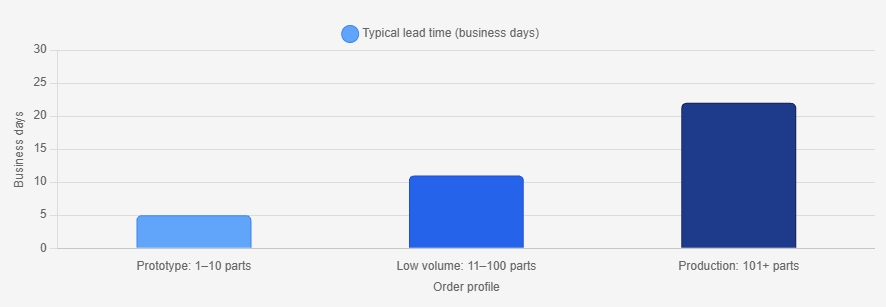
Prototype and low-volume orders generally provide the greatest design flexibility but may carry higher setup costs per part. Larger production runs usually reduce the unit price through setup-cost amortization, while requiring longer scheduling windows and more stable designs. The lead-time ranges shown are general business-day planning benchmarks; material availability, tolerances, finishing, and order complexity can change the final quote.
Review Communication, Support, and Long-Term Reliability
How to Choose Sheet Metal Fabrication Services in 2026?Strong communication often separates a dependable fabricator from a frustrating one. Ask how quickly engineers respond to design questions, material changes, and delivery risks. Request one clear contact person for your project. Shared drawings should show revision numbers, tolerances, and inspection points. During production, practical updates matter more than polished promises. A photo of a formed panel can reveal scratches, uneven bends, or missing holes before shipment. For Stamping Sheet Metal projects, confirm whether the supplier understands tooling limits, press capacity, and springback control.Technical support should continue after the purchase order. A capable team can review prototypes, explain manufacturability concerns, and suggest safer process adjustments. Ask for inspection records, material certificates, and sample approval procedures. I once treated fast replies as proof of reliability. That judgment was incomplete. The supplier responded quickly but avoided difficult questions about delayed tooling. Watch what happens when problems appear. That moment is more revealing.Tips: Ask for a communication schedule. Confirm escalation contacts. Review a sample inspection report. Check how change requests are documented. Discuss packaging details, especially for sharp or cosmetic parts. Also, ask about backup equipment and realistic capacity during peak periods. Long-term reliability should be visible in consistent quality, honest updates, and support that does not disappear after delivery.
How to Choose Sheet Metal Fabrication Services in 2026? — Review Communication, Support, and Long-Term Reliability
| Evaluation Dimension | Weight | Practical Benchmark for 2026 Supplier Reviews | Evidence to Request | Why It Matters | Risk if Weak |
|---|---|---|---|---|---|
| Initial Communication | 15% | Acknowledge a new inquiry within 1 business day and identify missing drawings, tolerances, materials, or quantities before quoting. | Sample response workflow, clarification checklist, and communication contact list. | Early clarification reduces avoidable revisions, quotation delays, and production misunderstandings. | Medium |
| Quotation Transparency | 12% | Quote should identify material grade, thickness, finish, tooling or setup charges, packaging, freight terms, validity period, and lead time. | Redacted quotation example and written assumptions for a comparable part. | Clear assumptions make total cost and supplier comparisons more accurate. | Medium |
| Engineering Support | 13% | Provide manufacturability feedback on bend reliefs, hole-to-edge distances, bend sequence, tolerances, and finish requirements before release. | Redacted design-review example, revision-control process, and engineering escalation path. | Design-for-manufacturing input can prevent scrap, rework, and late engineering changes. | High |
| Lead-Time Reliability | 15% | Use a written schedule with approval, production, inspection, and dispatch milestones; evaluate on-time delivery over multiple orders rather than one shipment. | Anonymized delivery history, capacity-planning method, and escalation procedure for delays. | Consistent delivery supports production planning and reduces line-stoppage exposure. | High |
| Quality Management | 15% | Documented inspection plans should define critical dimensions, sampling or 100% inspection requirements, measuring equipment, and nonconformance handling. | Quality manual summary, inspection report sample, calibration records, and corrective-action example. | Repeatable controls are more dependable than visual inspection alone, especially for tight-tolerance parts. | High |
| Material and Traceability Control | 10% | Material certificates or supplier records should be linked to the purchase order, heat or batch information, and final inspection documentation when required. | Redacted material certificate, lot-control example, and incoming-material inspection procedure. | Traceability helps verify material compliance and supports investigations or regulated applications. | High |
| Change and Revision Control | 8% | Only the latest approved drawing and revision should be released to production, with documented approval for substitutions or process changes. | Drawing-revision log, approval records, and obsolete-document control procedure. | Revision mistakes can create entire batches of unusable parts. | High |
| After-Sales Support | 5% | Define a named contact, issue-acknowledgment target, containment process, replacement or rework procedure, and corrective-action timeline. | Support policy, nonconformance-response template, and anonymized corrective-action report. | Fast containment limits the operational impact of defects or shipment problems. | Medium |
| Capacity and Continuity Planning | 4% | Review equipment capability, backup processes, staffing coverage, key-subcontractor controls, and recovery plans for equipment or supply interruptions. | Capacity overview, business-continuity summary, and subcontractor-control method. | Continuity planning reduces dependence on a single machine, person, or material source. | Medium |
| Long-Term Commercial Fit | 3% | Confirm payment terms, minimum order requirements, packaging standards, forecast handling, annual review process, and ability to support volume changes. | Draft supply terms, packaging specification, forecast policy, and review cadence. | Commercial alignment helps maintain stable service as demand and product requirements change. | Low |
Suggested scoring method: rate each dimension from 1 to 5, multiply the rating by its weight, and compare the weighted total. Treat lead-time history, quality records, traceability, and corrective-action performance as evidence-based checks rather than relying only on quoted claims.
How China’s Metal Finishing Suppliers Improve Product Durability, Performance, and Visual Appeal
China Metal Finishing Suppliers | High-Quality Factory Techniques for Enhanced Durability and Appearance
China’s metal finishing suppliers help manufacturers improve the durability, performance, and visual appeal of metal components through carefully selected surface treatment processes. Depending on the material and application, finishing may include polishing, plating, anodizing, powder coating, passivation, or other specialized techniques. These treatments create a cleaner, more uniform surface while helping protect parts from corrosion, tarnishing, chemicals, friction, and daily wear. They can also increase surface hardness, improve electrical conductivity, and remove sharp burrs that could affect assembly or product safety.A reliable finishing factory begins by evaluating the part’s material, operating environment, dimensional requirements, and appearance standards. This allows the finishing method and coating thickness to be matched with the product’s intended use, whether it is for machinery, automotive components, electronic equipment, hardware, or architectural applications. Proper pretreatment is equally important because cleaning, degreasing, and surface preparation help coatings bond securely and perform consistently over time.In addition to functional protection, professional finishing improves color consistency, smoothness, brightness, and overall presentation. Experienced Chinese suppliers can provide flexible solutions for different production volumes and customized requirements, while maintaining stable quality through process control and inspection. By combining technical expertise with efficient manufacturing capabilities, they help customers produce metal parts that remain attractive, reliable, and effective throughout their service life.
Conclusion
Choosing the right Sheet Metal Fabrication service in 2026 begins with clearly defining your project requirements, including part dimensions, material type, tolerances, surface finish, production volume, and intended use. Compare suitable fabrication methods, such as laser cutting, punching, bending, welding, or CNC forming, while considering the strength, weight, corrosion resistance, and cost of available materials. A capable supplier should have relevant industry experience, modern equipment, skilled personnel, and the capacity to manage both prototypes and larger production runs.Before making a decision, review the supplier’s quality standards, certifications, inspection procedures, and ability to maintain consistent results. Pricing should be evaluated alongside lead times, minimum order requirements, production flexibility, and possible changes in demand. Clear communication, responsive technical support, accurate documentation, and dependable after-sales service are also essential. By assessing these factors together, businesses can select a reliable fabrication partner that delivers quality parts, predictable schedules, controlled costs, and long-term value.
About Us
Shenzhen Hongrun Precision Technology Co., LTD., founded in 2014, has more than 20 years of experience in precision machining industry, excellent supply chain management technology and excellent project management engineer team. We have strong experience on difference materials.
Media Contact
Company Name: Shenzhen Hongrun Precision Technology Co., LTD.
Contact Person: Media Relations
Email: Send Email
Country: China
Website: https://www.hrsprecision.com/


