

Specialized Fishing Twines Manufacturing: Reinforcing CARPFISHING’s Integrated Net and Rope Portfolio
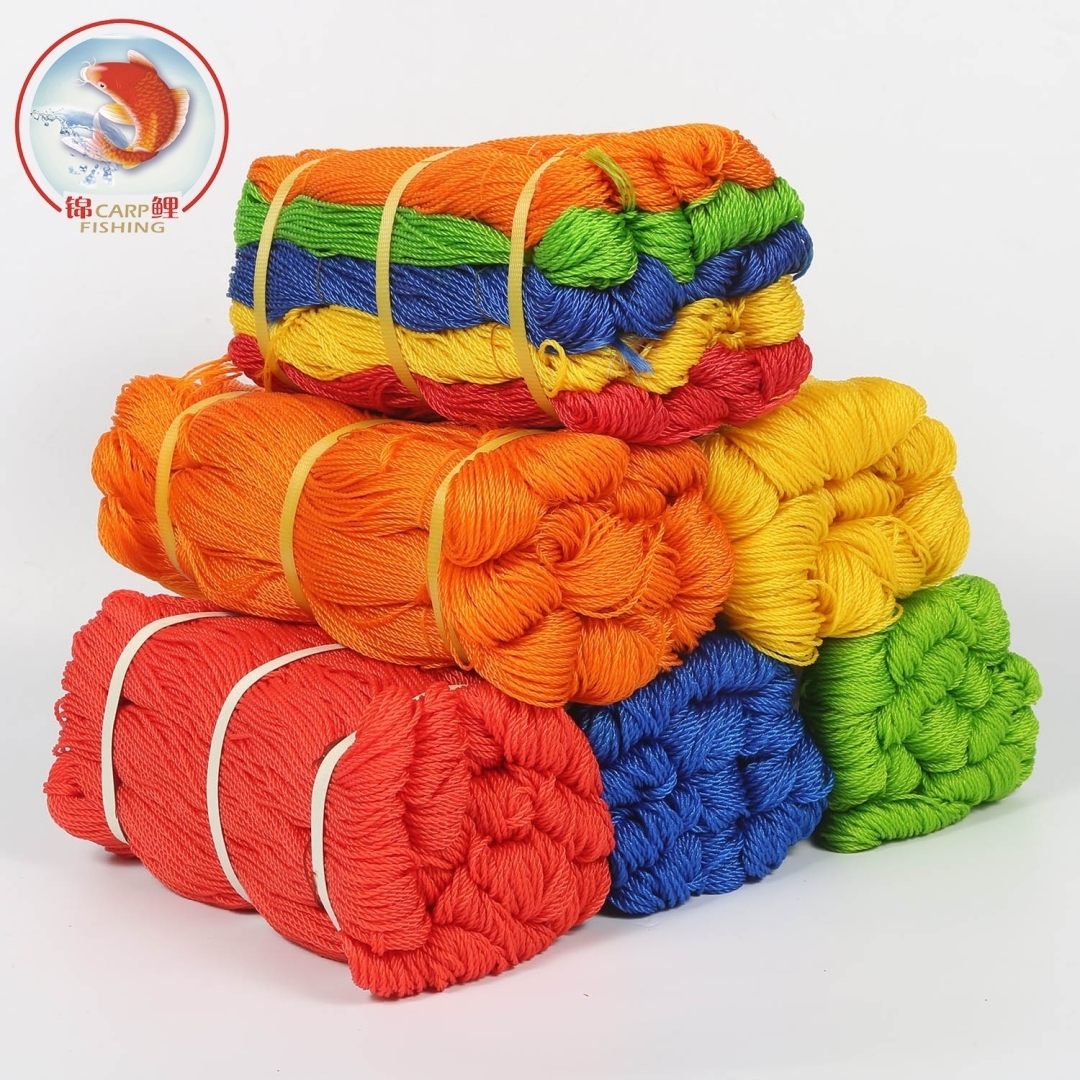
Shantou, Guangdong, China – November 19, 2026
Commercial marine gear engineering requires seamless technical alignment across all structural components of a harvesting assembly. In this context, specialized fishing twines manufacturing reinforces an integrated net and rope portfolio by providing the critical structural interface that binds netting panels to heavy framing lines across industrial fishing gear.
Marine net lofts, commercial fleet superintendents, and technical tackle procurement directors evaluate gear systems as cohesive operational units. Twines, netting panels, and marine ropes must share compatible polymer grades and elongation profiles. Matching these material properties ensures balanced load distribution across complete fishing assemblies in harsh ocean environments.
Defining Technical Integration Across a Multi-Category Tackle Portfolio
Technical integration in fishing gear manufacturing involves far more than simply listing multiple product lines in a common sales catalog. True integration requires aligning polymer chemistry, manufacturing standards, and engineering tolerances across all interrelated gear categories to create robust harvesting systems. When components share synchronized mechanical properties, assembled fishing gear maintains predictable hydrodynamic behavior under tow.
Harmonizing Polymer Chemistry Across Product Lines
When a single manufacturer produces primary netting, hanging twines, and framing ropes, engineering teams can standardize raw polymer selections. Utilizing matched grades of high-tenacity nylon or polyethylene ensures that every component exhibits consistent tensile response and degradation rates in seawater under active service conditions. Matching polymer shrinkage rates prevents localized netting puckering when complete assemblies are submerged in cold offshore waters.
Integrated production also enables harmonized quality control protocols. Netting panels, seaming twines, and perimeter ropes undergo standardized tensile testing. These evaluations confirm that all components interface smoothly during complex net loft assembly and rigging in regional ports. Unified quality standards across workshops ensure that every delivered component conforms to marine engineering specifications.
Predictable Gear Dynamics and Maintenance Planning
For commercial fleet managers, technical integration translates into predictable gear behavior at sea. Standardized material properties eliminate weak links and ensure that harvesting gear withstands dynamic wave forces, winch hauling friction, and heavy biomass loading without premature seam separation. Predictable wear patterns allow fleet superintendents to schedule planned maintenance rather than reacting to unexpected offshore gear failures.
How Specialized Twine Serves as the Structural Interface Between Nets and Ropes
In every commercial net assembly, twine functions as the vital mechanical bridge connecting flexible netting panels to heavy load-bearing ropes. The structural integrity of the entire net depends on the performance of this hanging interface under continuous marine service. A failure at the hanging interface causes immediate net tearing, jeopardizing vessel safety and commercial catch retention.
Load Transfer Mechanics Along Framing Lines
Framing ropes bear the primary towing and hoisting loads exerted by vessel winches and power blocks. Netting panels filter water and contain the commercial catch. Hanging twine must secure these two distinct structures together, absorbing concentrated shear stresses along every hanging loop during active trawling or purse seining. The hanging line must endure continuous dynamic tension as ocean waves transfer cyclic shock loads directly from framing ropes to netting.
If hanging twine lacks adequate tensile strength or surface abrasion resistance, line parting can occur. The constant rubbing between net meshes and framing ropes then causes severe net tearing and gear loss during active hauling operations in rough seas. Selecting high-tenacity twines with specialized surface coatings prevents premature line wear along high-friction contact points.
Elongation Compatibility and Knot Slip Prevention
Elongation compatibility is equally critical. If hanging twine stretches excessively while framing ropes remain rigid, netting meshes distort and lose their intended selectivity. Matching twine elasticity to rope and netting properties preserves proper gear opening geometry under heavy towing and biomass accumulation. Balanced elongation ensures that netting panels remain open to legal mesh dimensions without distorting selective escape zones.
Specialized twine formulations incorporate compact twists that seat firmly around rope fibers without slipping. This grip maintains exact hanging ratios along corklines and leadlines throughout prolonged fishing campaigns. Firm knot grip prevents meshes from bunching together along framing ropes, ensuring uniform water filtration during high-speed trawling.
Evaluating Technical Consistency Across Material and Construction Standards
Evaluating multi-category tackle manufacturers requires technical sourcing executives to audit material consistency across product lines. Discrepancies in polymer quality or manufacturing precision between nets, twines, and ropes undermine gear reliability and create operational hazards. Thorough supplier audits examine raw resin purity, processing temperatures, and mechanical testing records across all production lines.
Harmonized Environmental Stabilization and Thermal Setting
Polymer purity and ultraviolet stabilization packages must be harmonized across all gear elements. Sourcing netting stabilized with premium UV absorbers while utilizing unstabilized mending twine leads to rapid seam failures in high-sunlight equatorial fishing grounds, necessitating costly mid-season repairs. Harmonized UV stabilization protects both netting and hanging twines from rapid polymer degradation under equatorial solar exposure.
Thermal heat-setting standards must align across components. Properly heat-set netting panels and hanging twines resist dimensional shrinkage in deep ocean waters. Preventing thermal deformation preserves the calibrated water filtration and geometric balance of the assembled gear. Pre-stretched and heat-stabilized twines prevent uneven panel tension, ensuring that commercial gear retains its designed shape throughout deployment.
End-to-End Batch Quality Traceability
Documented quality traceability ensures that raw material lot numbers are tracked from resin pellets through yarn spinning, twine twisting, and netting weaving. This rigorous tracking provides commercial buyers with verified material consistency across every production run delivered to international ports. Comprehensive traceability records enable engineering teams to verify chemical composition and physical properties for every delivered batch.
Analyzing the Operational Benefits and Limits of Multi-Category Sourcing
Procuring complete net, twine, and rope programs from an integrated manufacturer provides distinct operational benefits while requiring disciplined procurement governance. Sourcing managers must evaluate both advantages and boundaries to optimize fleet supply programs. Structured multi-category procurement programs combine volume pricing advantages with simplified freight logistics for commercial fleet operators.
Supplying global commercial fisheries under the recognized brand name CARPFISHING, the enterprise reinforces its multi-category portfolio through integrated twine, netting, and cordage production, giving commercial fleets access to harmonized gear programs that simplify purchasing logistics.
Freight Consolidation and Direct Technical Accountability
Consolidated procurement reduces administrative burden, simplifies shipping documentation, and lowers container freight costs by combining dense cordage with high-volume netting bales in single ocean shipments, maximizing container payload efficiency. Combining heavy rope reels with high-volume netting bales maximizes ocean container payload while lowering overall freight overhead.
Single-source multi-category supply also facilitates technical accountability. When all gear components originate from a single manufacturer, resolving technical performance questions or adjusting specifications becomes straightforward and collaborative between engineering teams. Direct communication with a single engineering department streamlines custom gear modifications and resolves technical inquiries promptly.
Governance Safeguards and Itemized Specification Discipline
However, multi-category sourcing requires rigorous oversight to prevent suppliers from substituting lower-grade utility items into specialized gear orders. Procurement teams must define exact technical specifications for every product category rather than relying on generalized catalog descriptions. Independent laboratory testing on each product category verifies that utility items meet identical quality standards as primary netting lines.
Establishing a Coordinated Multi-Category Procurement Strategy
Technical gear buyers implement successful multi-category programs by developing comprehensive procurement packages that define specifications for netting rolls, matched hanging twines, and compatible framing ropes simultaneously, ensuring total structural synergy. Comprehensive procurement planning ensures that all required rigging components arrive in port simultaneously for scheduled vessel refits.
Pre-Production Synchronization and Sourcing Portals
Synchronized pre-production sample reviews verify that twine diameters fit mesh knots and rope grooves before volume container manufacturing begins. This validation eliminates costly dockside fitting delays. Physical compatibility trials confirm that hanging twines tie securely around rope grooves without pinching delicate net meshes.
Commercial fleet operators, net lofts, and gear distributors can explore technical integration opportunities and review comprehensive multi-category specifications directly at https://www.styhcarpfishing.com/ to enhance their commercial gear procurement programs.
About Us
Shantou Yonghui Fishing Tackle Industry Co., Ltd. established in 1991, covers an area of 34000 square meters. We specialize in all kinds of fishing nets, such as machine or hand-made fishing nets(with Nylon, polyester, PE, cotton material) , sponge net, casting nets, gill nets, and all kinds of twines & ropes, fish & crab traps, floats, as well as many other items with the trade mark “”Carpfishing”” brand.
We have firmly adhered to “”Honest as basic, and win with good quality”” as our soul of management for more than 30 years. We have been succeeded in a great enhancement, and perfect. We do harvest a great recognition and applause from abroad with our good name and good quality .
In view of both futures, we promise to supply our best quality products with best price in multiple scopes and advanced dealings.
Media Contact
Company Name: SHANTOU YONG HUI FISHING TACKLE INDUSTRY CO., LTD.
Contact Person: CARPFISHING
Email: Send Email
Country: China
Website: https://www.yqmec.com


